Psoriasis vs. Eczema: How They Differ (and Why It Matters)
Two common itchy, inflamed skin conditions can look similar. Here are the key differences between psoriasis and eczema, plus when to get evaluated.
Disclaimer: This article is for educational purposes only and is not medical advice. If you have symptoms or concerns, talk with a qualified clinician.
Psoriasis and eczema are both common, inflammatory skin conditions. They can both cause itchy, irritated skin — and they can sometimes look similar from a distance.
But they are not the same condition, and getting the diagnosis right matters because the best treatments and triggers can differ.
Quick takeaways
- Eczema (often atopic dermatitis) commonly causes very itchy, dry, inflamed patches and can flare with irritants and a disrupted skin barrier.
- Psoriasis often causes thicker, well-defined scaly plaques and may be less itchy than eczema (though itch can still occur).
- Psoriasis may involve the scalp, elbows, knees, lower back, and nails.
- If you have joint pain or stiffness alongside psoriasis symptoms, seek medical evaluation (possible psoriatic arthritis).
What is eczema?
"Eczema" is a broad term for several conditions that cause inflamed, itchy skin. The most common type is atopic dermatitis.
The American Academy of Dermatology (AAD) describes atopic dermatitis as a condition that causes itchy, dry, inflamed skin. It is not contagious and often begins in childhood, but it can start at any age (AAD overview).
For a deeper comparison between eczema and everyday dryness, see: Eczema vs. dry skin.
What is psoriasis?
Psoriasis is an immune-mediated condition that speeds up skin cell turnover, leading to thickened, scaly patches. The most common type is plaque psoriasis.
For a general overview, see the AAD psoriasis resource.
How they can look different
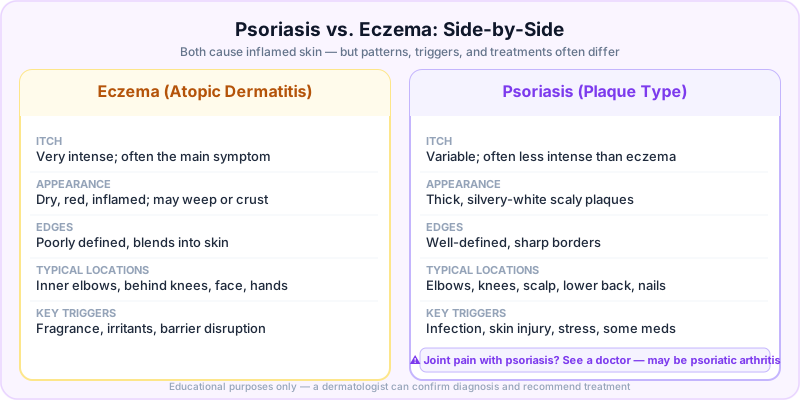
Common eczema clues
- Very itchy patches
- Dryness and a rough texture
- Flares after soaps or fragrance, winter dryness, sweat, or stress
- May have oozing or crusting during severe flares
Common psoriasis clues
- Thicker, well-defined plaques
- Silvery or white scale on top of red, pink, violet, or brown patches (appearance varies by skin tone)
- Often on elbows, knees, and scalp
- Nail changes (pitting, separation, thickening) can occur
Common body locations
- Eczema: often inner elbows and behind the knees, hands, face and neck (especially in children).
- Psoriasis: often scalp, elbows, knees, lower back; can involve nails.
Triggers and flare patterns
Both conditions can flare with stress and illness, but patterns differ:
- Eczema is strongly linked to barrier disruption and irritation (fragrance, harsh cleansers, frequent handwashing). Moisturizing and gentle skin care are foundational.
- Psoriasis can flare with infections (for example, some people notice flares after strep throat), skin injuries (the "Koebner phenomenon"), certain medications, and stress.
Why diagnosis matters
Some over-the-counter routines help both conditions, but medical treatment choices may differ. A clinician can also rule out look-alikes such as:
- Seborrheic dermatitis (scalp or facial scaling)
- Contact dermatitis (allergic or irritant reactions)
- Fungal infections
If you suspect contact triggers — such as new skincare products, detergents, gloves, or workplace exposures — see our guide: Contact Dermatitis: Triggers, Symptoms, and What Can Help.
When to see a clinician
Consider evaluation if:
- The rash is persistent or worsening after 2–3 weeks of gentle care
- You have widespread involvement or a facial or eyelid rash
- There is pain, swelling, warmth, pus, or fever (possible infection)
- You have psoriasis symptoms plus joint pain or stiffness
References
- American Academy of Dermatology (AAD). Psoriasis overview: https://www.aad.org/public/diseases/psoriasis/what
- AAD. Atopic dermatitis overview: https://www.aad.org/public/diseases/eczema/types/atopic-dermatitis
- National Institute of Arthritis and Musculoskeletal and Skin Diseases (NIAMS). Psoriasis: https://www.niams.nih.gov/health-topics/psoriasis
- MedlinePlus. Psoriasis: https://medlineplus.gov/psoriasis.html
- MedlinePlus. Atopic dermatitis: https://medlineplus.gov/eczema.html