Contact Dermatitis: Triggers, Symptoms, and What Can Help
A guide to irritant vs. allergic contact dermatitis, common triggers (including skincare), and when patch testing or medical care can help.
Disclaimer: This article is for educational purposes only and is not medical advice. If you have symptoms or concerns, talk with a qualified clinician.
If you have ever tried a new soap, skincare product, or detergent and then developed a rash, you may have experienced contact dermatitis.
Contact dermatitis is an eczema-type reaction that happens when your skin is exposed to an irritant (something that damages the skin barrier) or an allergen (something that triggers an immune reaction). The two types can look similar, but the triggers and prevention strategies can differ.
Quick takeaways
- Irritant contact dermatitis is more common and happens when something damages your skin (harsh soap, repeated washing, cleaning chemicals).
- Allergic contact dermatitis happens when you become allergic to a substance (fragrance, preservatives, nickel, some hair dyes).
- The most effective "treatment" is often identifying and avoiding the trigger — sometimes with the help of patch testing.
- A gentle cleanser and a fragrance-free moisturizer routine helps support the skin barrier.
What is contact dermatitis?
The American Academy of Dermatology (AAD) describes contact dermatitis as a rash that can be itchy and uncomfortable, often caused by an irritant or allergen touching the skin (AAD overview).
Contact dermatitis is not contagious.
Irritant vs. allergic contact dermatitis
Irritant contact dermatitis
Common clues:
- Starts after repeated exposure (frequent handwashing, cleaning products)
- Can sting or burn as well as itch
- Often affects the hands
Allergic contact dermatitis
Common clues:
- You may react after becoming sensitized (sometimes after many exposures with no prior reaction)
- The rash can appear where the allergen touched — and sometimes spreads
- Itching can be prominent
Common triggers
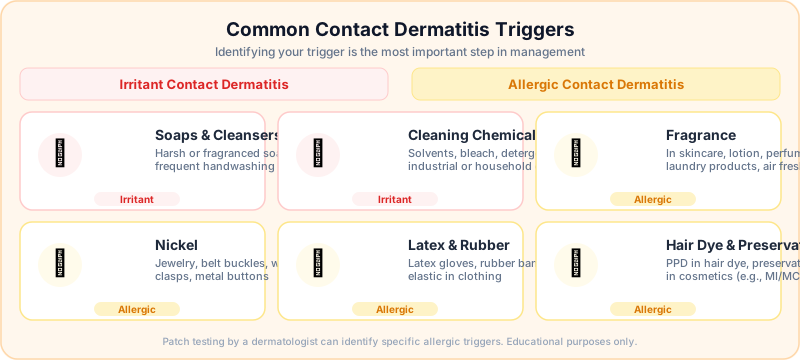
Triggers vary, but common ones include:
- Fragrance in skincare, soaps, and laundry products
- Preservatives in cosmetics (some individuals may react to certain preservatives)
- Nickel (jewelry, belt buckles)
- Hair dyes (certain chemicals used in dyes)
- Rubber or latex and glove materials
- Cleaning products and solvents
- Frequent handwashing without moisturizing afterward
If your rash is scaly and thick, or seems chronic and recurrent, it can overlap with other conditions. Two common look-alikes:
- Eczema (atopic dermatitis): Eczema vs. dry skin
- Psoriasis: Psoriasis vs. eczema
What can help (general skin-care steps)
1) Stop the suspected trigger(s)
If you recently changed products, consider pausing them and returning to a simple routine.
2) Keep it simple: gentle cleanser + moisturizer
Barrier support helps the skin calm down. AAD guidance on eczema-friendly moisturizing can be helpful even for contact dermatitis flares.
3) Protect your hands
If hand dermatitis is a recurring pattern:
- Moisturize after washing
- Use gloves for cleaning and dishwashing (avoid direct chemical contact)
- Consider cotton liners if rubber gloves irritate
4) Consider medical evaluation for persistent rashes
A clinician may recommend topical anti-inflammatory treatments and can check for infection or fungal rashes.
What is patch testing?
Patch testing is a method dermatologists use to identify the specific allergens causing allergic contact dermatitis. It is different from the skin-prick testing used for respiratory allergies.
The AAD mentions patch testing as a tool to help identify what is causing the rash (AAD: contact dermatitis).
When to see a clinician
Seek evaluation if:
- The rash is worsening or not improving after 2–3 weeks of gentle care
- Your rash is on the face or eyelids, genitals, or large body areas
- You have pain, warmth, pus, fever, or rapidly spreading redness
- You suspect a workplace exposure you cannot avoid without professional guidance
References
- American Academy of Dermatology (AAD). Contact dermatitis overview: https://www.aad.org/public/diseases/eczema/types/contact-dermatitis
- MedlinePlus. Contact dermatitis: https://medlineplus.gov/contactdermatitis.html
- National Eczema Association. Contact dermatitis: https://nationaleczema.org/eczema/types-of-eczema/contact-dermatitis/
- AAD. How to reduce eczema flares with moisturizer: https://www.aad.org/public/diseases/eczema/insider/moisturizer-reduce-flares