Acne Types: What They Look Like (and What Can Help)
A patient-friendly guide to common acne types (comedonal, inflammatory, cystic), what can worsen breakouts, and an overview of evidence-based treatments.
Disclaimer: This article is for educational purposes only and is not medical advice. Talk with a qualified clinician for personal treatment decisions.
Acne is extremely common. It can show up as a few blackheads, clusters of inflamed pimples, or deeper, painful bumps that leave marks.
Knowing the type of acne you have can help you understand why some products work for you but not for others — and when it is worth seeing a dermatologist sooner.
Quick takeaways
- Acne is not one thing — comedonal acne (blackheads/whiteheads) is different from inflammatory or cystic/nodular acne.
- Gentle, consistent routines usually work better than harsh scrubs.
- "Oil-free" or "non-comedogenic" products can be helpful for some people.
- If acne is painful, causing scarring, or affecting your mental health, it is a good idea to seek care.
What causes acne (in plain English)
Acne involves a mix of:
- Clogged pores (oil + dead skin)
- Inflammation
- Bacteria (one factor, not the only one)
- Hormonal influences for many people
For a general overview, see the AAD acne resource.
Common acne types
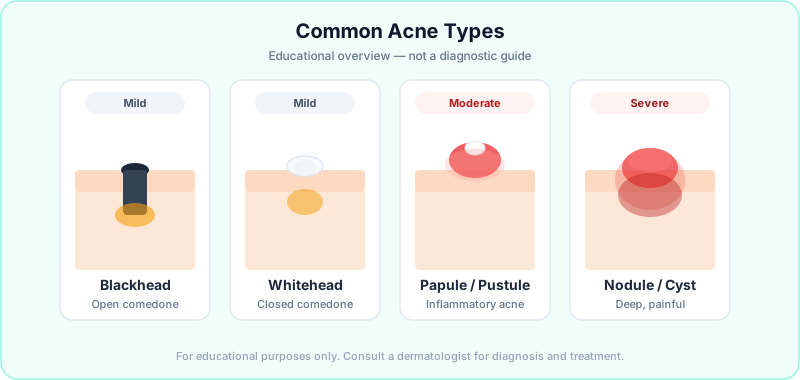
1) Comedonal acne (blackheads and whiteheads)
- Blackheads are open comedones (the top is open to air, which darkens the plug).
- Whiteheads are closed comedones.
This type often responds to ingredients that help keep pores clear.
2) Inflammatory acne (papules and pustules)
- Papules are red, tender bumps.
- Pustules are inflamed bumps with a visible white center.
3) Nodular/cystic acne (deeper, painful bumps)
These can be more painful and more likely to scar. Early professional treatment can reduce the chance of long-term scarring.
4) Acne mechanica (friction/pressure)
Masks, helmets, chin straps, and sports gear can contribute in some people.
What can make acne worse
- Picking or squeezing (can worsen inflammation and increase the risk of scarring)
- Over-washing, harsh scrubs, or frequent "stripping" products
- Heavy, oily cosmetics or hair products (varies by person)
- Stress and poor sleep (can worsen inflammation)
What can help (overview)
This is a high-level overview — the best plan depends on acne type, skin sensitivity, pregnancy status, and other factors.
Gentle basics
- Wash with a gentle cleanser.
- Use a non-comedogenic moisturizer if you are dry or irritated.
- Consider daily sunscreen (some acne treatments increase sun sensitivity).
Over-the-counter options
Many people start with OTC routines. A clinician can help if you are not improving after consistent use. The AAD provides patient guidance on acne diagnosis and treatment.
Prescription options
Dermatologists can tailor treatment based on acne type and severity (topicals, oral medications, and other approaches). If you are not improving, it does not mean you "did something wrong" — it often means you need a different plan.
When to see a dermatologist
Consider evaluation if:
- Acne is painful or cystic/nodular
- You are developing scars or dark marks
- You have tried consistent OTC routines for 8–12 weeks with little improvement
- Acne is affecting self-esteem, anxiety, or mood
Related reads
- If your skin reacts to new skincare, soaps, or metals, it could be Contact Dermatitis: Triggers, Symptoms, and What Can Help.
- For other itchy, inflamed skin conditions, see Eczema vs. Dry Skin: Signs, Triggers, and Basic Care.
- If you have a red, sensitive, acne-like facial rash with flushing, it could be rosacea (coming soon).
- If you have a persistent scaly rash in oily areas (scalp/eyebrows), consider seborrheic dermatitis (coming soon).
References
- American Academy of Dermatology (AAD). Acne overview: https://www.aad.org/public/diseases/acne/really-acne/overview
- AAD. Acne: Diagnosis and treatment: https://www.aad.org/public/diseases/acne/derm-treat/treat
- MedlinePlus. Acne: https://medlineplus.gov/acne.html
- NIAMS. Acne (general info): https://www.niams.nih.gov/health-topics/acne